
Welcome to the first instalment of our In[Cider] Report Series: from orchard to can, Ontario’s craft cider is refreshingly close to home.
By Maddie Johnson
The sun’s high, the bay’s glassy, and someone just handed you a chilled can from the cooler. You take a sip—crisp, not too sweet, surprisingly refreshing. You’re thinking: this tastes like summer.
But behind that easy-drinking can is a whole world of craft cider—and in Ontario, its roots are growing deep.
Cider isn’t new—not globally, and certainly not here. But in Ontario, the craft scene is growing in both quality and curiosity. For a province blessed with diverse landscapes, rich soil, and a climate that apples love, it’s no surprise that some of Canada’s most compelling cider is being made here—often just down the road from where the fruit was picked.
So, what exactly is cider? And why are more Ontarians discovering—or rediscovering—their taste for it?
Fermented. Not Brewed.


Photos Bre Ferguson of Banyan and Bone Photography
First, let’s clear something up: cider isn’t brewed, it’s fermented. That means no hops, no water, no grains. Just apples. Pressed, juiced, and fermented with natural or cultured yeasts. It’s more like wine than beer—though it doesn’t always get that kind of credit.
“People think cider is brewed, but it’s really closer to winemaking,” says Jenna Boucher, lead cider maker at Two Blokes Cider near Seagrave. “You’re working with the fruit, choosing your yeast, watching the fermentation. It’s about getting the best juice possible—and letting it speak.”
Each step matters. Fermentation needs to be carefully monitored. Blending requires a practiced palate. Bottling, aging, and packaging come next, and with each batch, there are countless variables to consider.
“Cider making is simple,” Boucher adds, “but there are a million little things that can go wrong. I often joke that I’m just a caregiver of yeast.”
Not Just Any Apple


Photos Johnny Lam
In cider, not all apples are created equal. Grocery-store favourites like Honeycrisp and Gala may be great for snacking, but when it comes to fermentation, they lack the acid and tannin structure that cider needs to sing.
That’s why many of Ontario’s most respected cideries are growing heritage and cider-specific varieties. These are apples bred not for looks or crunch, but for flavour. They’re more like wine grapes than lunchbox fruit: rugged, tannic, complex.
“These apples aren’t pretty—and that’s the point,” says Jenifer Dean of The County Cider Company, Ontario’s oldest craft cidery. “Ontario grows incredible cider apples.”
The province’s diversity of soil, climate, and lake effect conditions create distinctive terroir. A Dabinett grown near Georgian Bay isn’t the same as one grown in Prince Edward County. The soil matters. The weather matters. And that’s what makes drinking Ontario cider so interesting.
What Cider Really Tastes Like

Frances Beatty Photography

Photo Jessica Crandlemire

One of the biggest misconceptions about cider? That it’s sweet. Or that it’s all the same.
“People try one overly sweet cider and think they know the whole category,” says Boucher. “But cider is incredibly diverse. There’s dry, semi-dry, still, sparkling, fruited, hopped, botanical. It can be bright and crisp or rich and funky.”
At Spy Cider House in the Blue Mountains, cider maker Jonah Read leans into the natural expression of the fruit.
“We don’t add sugar,” he says. “Our cider is just apples and yeast. You’re tasting the fruit—clean, crisp, and full of character.”
Sara Boyd, who owns and runs Loch Mōr Cider Co. in Prince Edward County, agrees.
“We make the cider we like to drink—drier, with more complexity. Cider pairs beautifully with food, and because it’s lower in alcohol than wine, you can enjoy it over a longer meal. I actually think it pairs better.”
And despite the sunny setting we began with, cider isn’t just for warm weather.
Ontario producers are crafting everything from lightly sparkling summer sippers to rich, barrel-aged bottles that pour like wine. Whether it’s a Kingston Black single varietal, a lavender botanical blend, or a delicately sweet ice cider, Ontario’s craft cider makers are redefining what cider can be—and what occasion it can be for.
Drink Ontario Apples


Photos Kassandra Melnyk
Cider is more than just a drink—it’s a deeply local product. When you choose an Ontario cider, you’re choosing more than flavour. You’re choosing the farmers, too.
“This is apple country,” says Read. “It would almost be wrong not to make cider here.”
That sense of place and purpose runs through every part of the process.
“Good things grow in Ontario—that’s what I remember from growing up here,” says Boucher. “And I see it every day. The land gives us these beautiful apples. It’s our job to treat them with care.”
Supporting Ontario cider means supporting small farms and regenerative agriculture. It means fewer food miles and more transparency. And often, it means getting to meet the person who made your drink, right there in the tasting room.
“I think we’re just scratching the surface of what cider can be,” says Boyd. “There’s so much potential here—and the quality is already incredible. People are starting to notice.”
And the experience is part of the appeal. At many of Ontario’s small cideries, you’re not just sipping something local —you’re stepping into it. You might find yourself at a communal table overlooking the orchard, listening to a local musician, tasting flights under a canopy of trees, or chatting with the person who planted them.
So next time you’re choosing what to drink with dinner, or packing a cooler for a weekend getaway, consider what’s growing close to home. Taste it slowly. Ask where the fruit came from. Let it tell you a story.
Because Ontario cider isn’t just having a moment—it’s growing something lasting, one apple at a time.
Pair Like a Pro
With Jenna Boucher, Certified Pommelier & Cider Maker
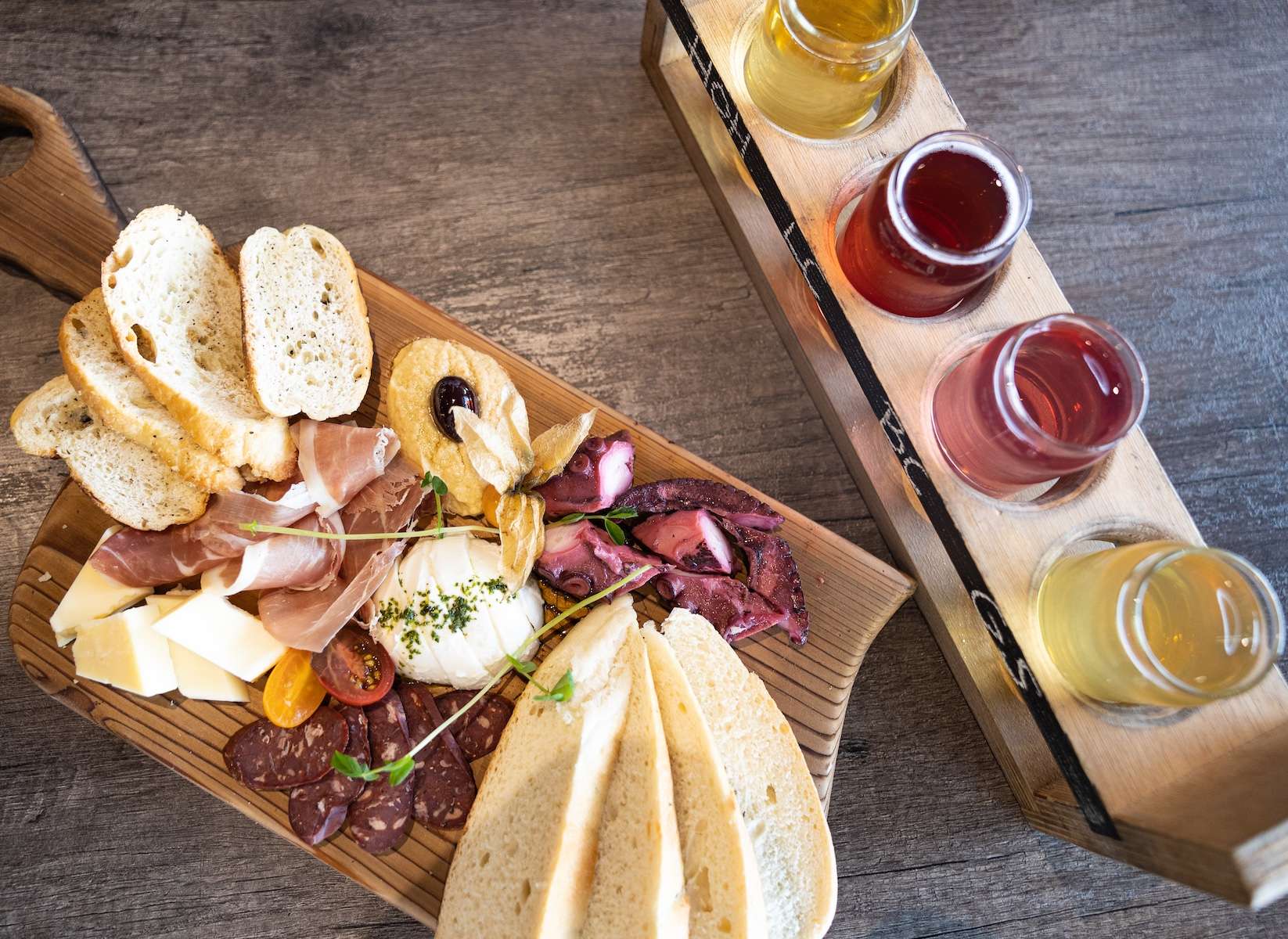
Pairing cider with food is easier than you might think—and more rewarding than you might expect. According to Boucher, the key lies in understanding the ‘Four Cs’: Complement, Contrast, Cut and Complete.
Complement
Mirror the cider’s key flavours with similar flavours or profiles to create harmony.
Try:
Spy’s Golden Eye with an apple, smoked trout and arugula salad
Muskoka Lakes’ Cliff Jump Cranberry Cider with a late-summer salad or berry galette
Contrast
Balance opposites—pair sweet with heat, dry with creamy, light with rich.
Try:
Coffin Ridge’s Lavender Earl Grey with an aged manchego or Ontario blue cheese
Pommies Mimosa Cider with spicy breakfast sausage or a chorizo hash
Cut
Use cider’s natural acidity and bubbles to slice through fat, salt, or richness.
Try:
Slabtown’s Hint O’ Hops with fish and chips and a lemony tartar sauce
Two Blokes’ Pomona’s Pour with buttered corn on the cob with chilli-lime salt
Complete
Use cider to fill in what’s missing—a touch of sweetness, acidity, or texture.
Try:
County Cider’s Ice Cider with vanilla bean ice cream or affogato
Thornbury Pear Apple Cider with a summer grain bowl with roasted squash, feta, and mint
Discover more perfect pairings of small-batch cider with artisan cheeses!