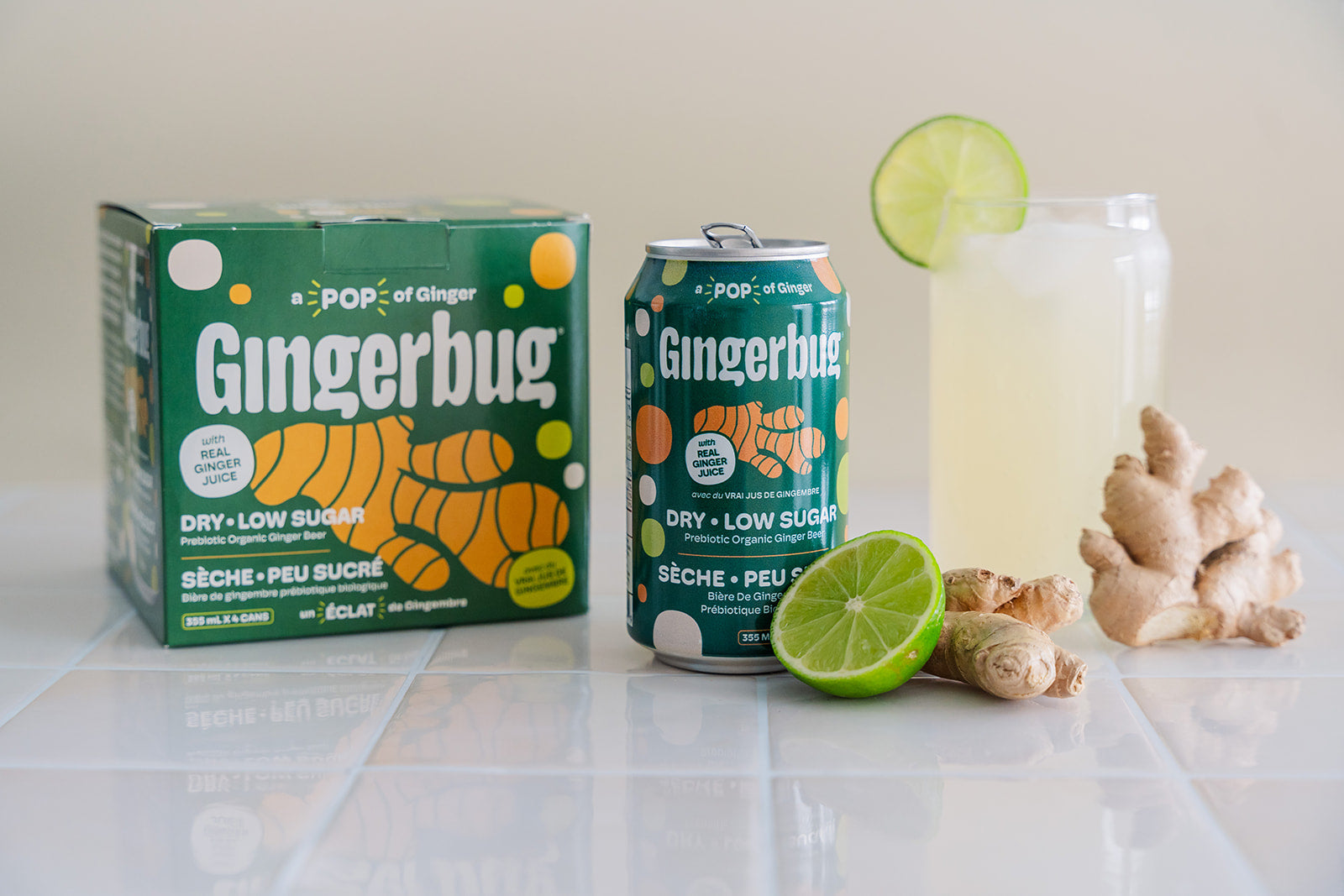
When we first met Megan Silk, Gingerbug was growing from its farm-market roots into one of Northern Ontario’s most promising young beverage brands. The ride has only become wilder since.
By Kristina Smith
Gingerbug landed in Loblaw stores this past summer, is preparing to roll out at Metro, and recently made its first move into the United States. Those milestones tell only part of the story.
Behind them are significant financial risks, hard decisions, countless kilometres, and the complicated reality of building a beverage company while raising five children.
We caught up with Megan to talk about what scaling really costs, why the earliest local believers still matter, and what she hopes will remain unchanged as Gingerbug grows.
When Wander North last featured Gingerbug, the story already felt like a wild ride.
What does growth look like right now—more stores, more flavours, more team members, more sleep?
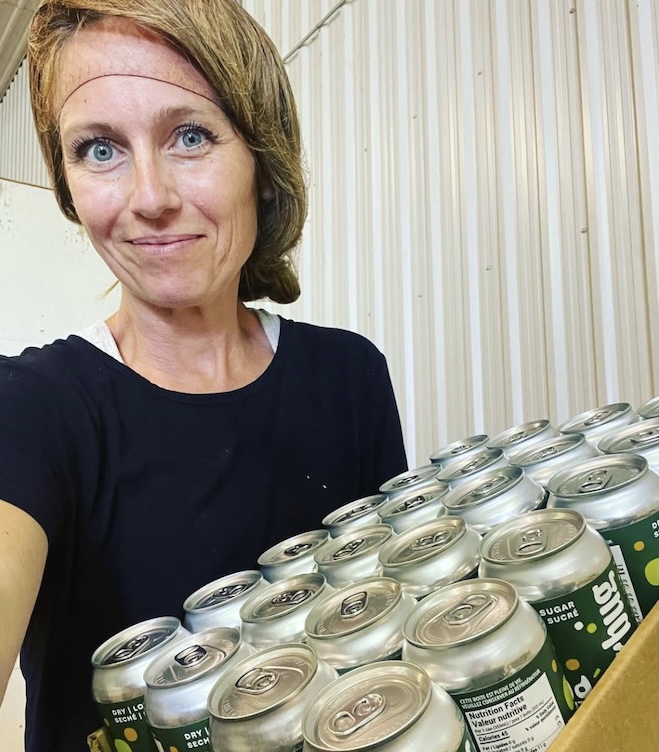
Megan: It has definitely been a wild ride, with a lot of highs and just as many lows. The learning curve has been incredibly steep. Right now, growth includes our expansion into the United States, which happened just this month. We also rolled out in Loblaw stores this summer and will be arriving at Metro in October. We’re incredibly excited about these accounts because they are pillar retailers in Canada.
What is one part of scaling Gingerbug that has been much harder than people might assume? What has been more fun than expected?
At times, the risk has felt like almost too much to bear. Beverage is an incredibly competitive category, and very few companies ever reach $1 million in sales. It is a high-risk, potentially high-return business, and it has taken a significant amount of capital to reach this point.
Most people don’t see the stress and risk involved in scaling a company like this, but they are very real and have certainly taken a toll on our family.
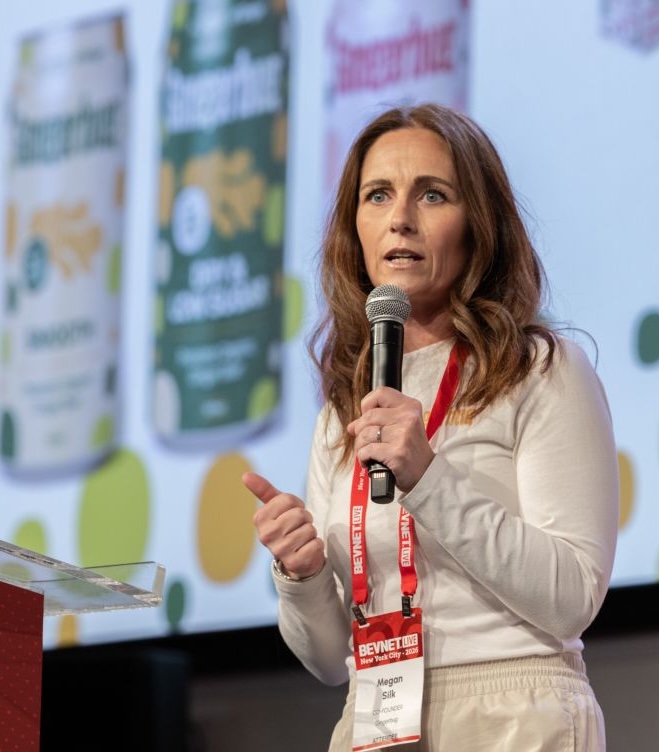
The unexpectedly fun part has been expanding our network, meeting all kinds of new people, and visiting new places. Before this, I hadn’t been on a plane in 15 years—that’s what happens with five kids and a farm! This year, we’ve gone on a huge sales blitz across several U.S. states and major Canadian cities.
What do you think people respond to first: the flavour, the gut-friendly aspect, or the name?
I think the name and brand play a role, for sure. Our brand is one of the things I’m proudest of, and we made the right decision by getting it right from the beginning.
I also think the fact that we use only real-food ingredients resonates with consumers once they learn about it. We’re a ginger soda that actually contains ginger—who knew?
Have there been any flavour ideas that sounded brilliant in theory but absolutely did not survive the taste test?
Right now, we’re trying to perfect a “classic” ginger ale. Our test batch is available for purchase, and we’re asking consumers for feedback on how we might make it just a little more special.
Finding the right level of sweetness can be difficult when you’re creating a health-conscious drink that still needs to taste great, particularly when you use only organic cane sugar as a sweetener. We’re getting close and hope to release the finished flavour for the holidays this year.
You and Bren have built a growing beverage brand while raising five children. What has family life taught you about running a business, and vice versa?
I think Bren and I are so accustomed to chaos and delayed gratification that we’ve been able to take many of the stressful periods and low points in stride. If I were asked, though, I would not recommend building a business like this while raising children. It’s too risky and too consuming.
In our first feature, you mentioned the early support of independent retailers such as Kimberley General Store. How important have those small, local believers been as the brand has grown?
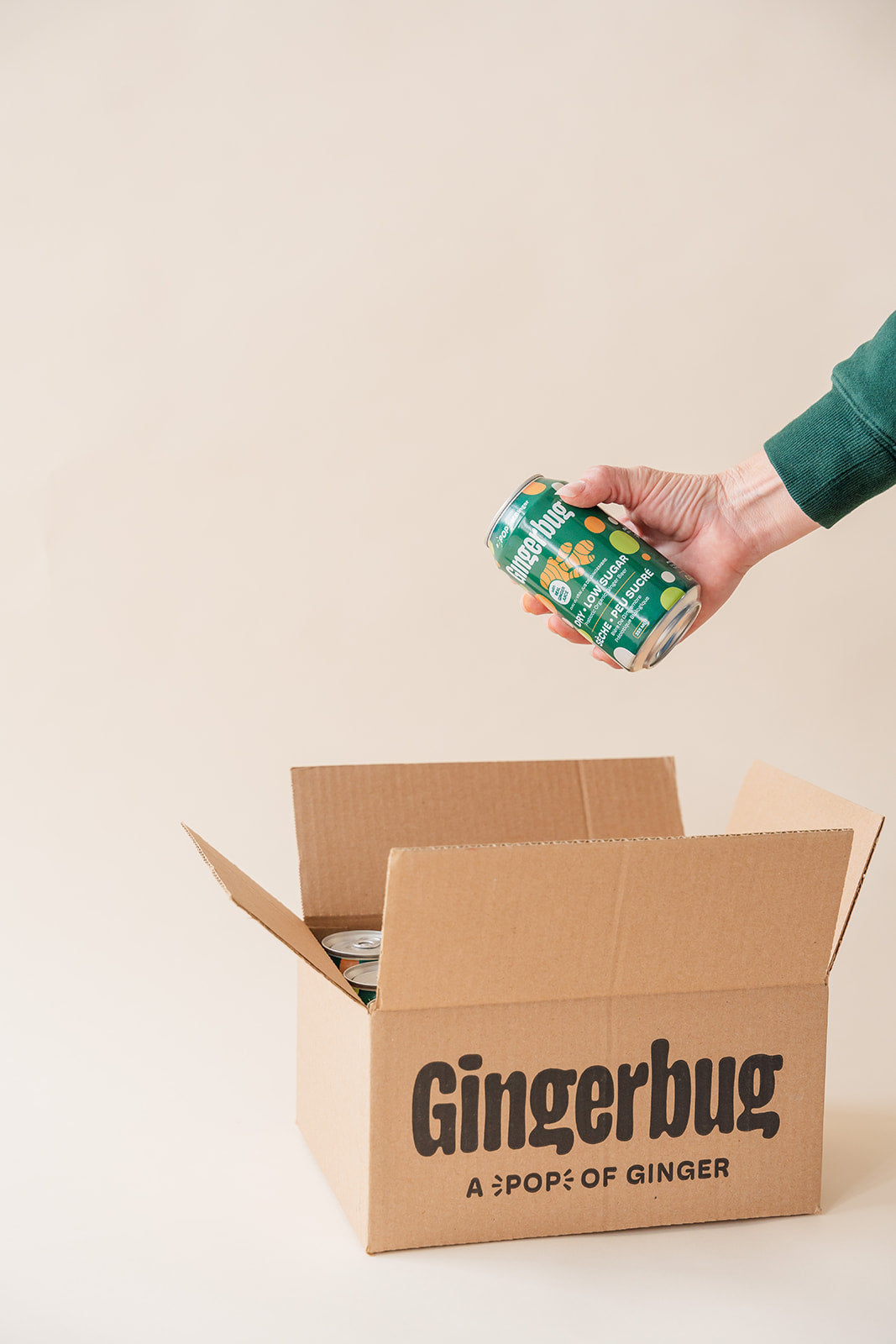
They are the foundation of our brand’s growth, and we will always be grateful to them. Our first three retailers were Kimberley General Store, Grandma Lambe’s, and Goldsmith’s—the same three retailers that sold our farm’s produce when we were farmers.
We had a full-circle moment this summer when our fifteen-year-old daughter, Essery, got her first job at Goldsmith’s. She now rings cans of Gingerbug through the cash. She won’t admit it, but I’m sure she finds that funny.
You previously said Gingerbug began here and would always be manufactured here. Why did that change?
I did say that—but I was wrong. That has been part of the learning curve. As we grew, the priority had to become finding the right facility, particularly one that could meet the requirements of Costco and other large retailers that have begun knocking on our door.
While we continue to support our local community through sponsorships and donations, Gingerbug is now manufactured in Halifax, Nova Scotia.
When you imagine Gingerbug five years from now, what do you hope still feels exactly the same?
I hope it is still made using only real food. That is incredibly important to us. I also hope we’re through the cash crunch and have found a more balanced, stable family life.
What is currently fermenting—in either the literal or metaphorical sense?
One thing that isn’t fermenting is our drink. We started that way but quickly learned that the original recipe wouldn’t work at scale. The product we make now is healthier and better in every way.
In the metaphorical sense, we have a major social media campaign fermenting behind the scenes that we’re about to roll out. We’re very excited about it.
What would you pair Gingerbug with for the perfect afternoon?
I love drinking our Dry ginger beer with a platter of interesting cheeses, meats, and crackers.